

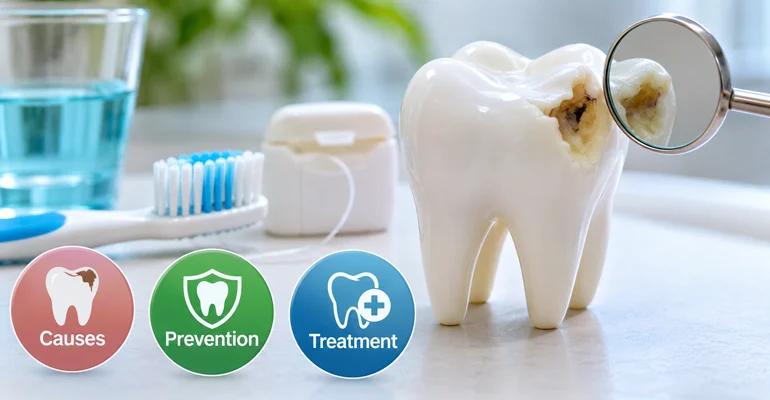
Almost everyone has heard the word “cavity,” yet many people only learn what one really is when a dentist points it out on an X-ray. By then, it may have been quietly developing for months.
The good news is that cavities are largely preventable, and when they’re caught early, they’re simple to treat. Here’s how they form, how to stop them, and what to expect if you already have one.
What Is a Cavity?
A cavity is a small hole that forms in a tooth when decay breaks through the hard outer layer, called enamel. Dentists often call this tooth decay or dental caries.
It starts with plaque, the sticky film of bacteria that builds up on teeth every day. When you eat or drink sugars and starches, those bacteria produce acid that slowly dissolves enamel and weakens the tooth beneath it.
What Causes Cavities?
Decay rarely comes from a single habit. It usually develops when several of these factors combine:
- Frequent snacking or sipping on sugary or acidic foods and drinks, which keeps your teeth under acid attack all day
- Inconsistent brushing and flossing, which lets plaque harden into tartar
- Dry mouth, since saliva helps neutralize acid and wash food away
- Deep grooves in back teeth, where food and bacteria easily hide
- Gum recession, which exposes the softer root surface of the tooth
- Limited fluoride exposure, which leaves enamel less resistant to acid
It’s worth noting that how often you consume sugar matters as much as how much. A single sugary drink sipped for two hours is harder on your teeth than the same drink finished in ten minutes.
Early Warning Signs
Early cavities often cause no symptoms at all, which is why routine exams matter. As decay deepens, you may notice:
- White, chalky, or brown spots on a tooth
- Sensitivity to hot, cold, or sweet foods
- A visible pit or hole in the tooth
- Pain when biting down
- Food that keeps getting stuck in the same spot
Lingering or throbbing pain can mean the decay has reached the nerve. If that sounds familiar, our guide to the signs you may need a root canal explains what to watch for.
How to Prevent Cavities
Prevention comes down to a handful of consistent habits:
- Brush for two minutes, twice a day, with fluoride toothpaste
- Floss daily to clean between teeth where a brush can’t reach
- Limit between-meal snacks and sugary or acidic drinks
- Drink water after meals, especially if you can’t brush right away
- Replace your toothbrush every three to four months
- Keep up with regular checkups and professional cleanings
Fluoride deserves special mention. The Canadian Dental Association supports the appropriate use of fluoride as a safe and effective way to prevent tooth decay, and recommends talking with your dentist about your personal cavity risk and which fluoride products suit you.
How Cavities Are Treated
The right treatment depends on how far the decay has progressed. Catching it early almost always means a simpler, more comfortable visit.
- Very early decay: Sometimes it can be monitored or reversed with fluoride and better home care
- Small to moderate cavities: The decayed area is removed and the tooth is restored with a filling
- Larger cavities: A crown may be needed to protect a tooth with significant damage
- Infected or deeply decayed teeth: A root canal may be needed to save the tooth
- Teeth that can’t be saved: Extraction followed by a replacement such as a dental implant
Fillings, cleanings, and checkups are all part of our general dentistry services at Weston Dental Office, so most cavities can be handled right in our Toronto clinic.
Cavities in Children and Adults
Cavities aren’t just a childhood problem. Children are prone to them while their brushing skills develop, and adults face new risks from gum recession, dry mouth caused by medications, and decay forming around older fillings.
That’s one reason many families choose a single practice for everyone. Our article on why a family dentist is a smart choice explains how consistent care helps spot problems early at every age.
FAQ
Can a cavity heal on its own?
Only the very earliest stage, when enamel is just starting to weaken, can sometimes be reversed with fluoride and good oral hygiene. Once a hole has formed, it needs professional treatment.
Does a cavity always hurt?
No. Many cavities cause no pain until they’re quite deep, which is why regular exams and X-rays are so valuable.
How often should I see the dentist to prevent cavities?
Most people do well with checkups and cleanings about every six months, though your dentist may recommend a different schedule based on your risk level.
Book a Checkup at Weston Dental Office
If it’s been a while since your last exam, or you’ve noticed sensitivity or a spot that doesn’t look right, don’t wait for it to become painful. A quick visit now can save you from a bigger repair later.
Call Weston Dental Office at (416) 247-1928 or book an appointment today. We’re located at 1928 Weston Rd, York, ON, and proudly serve patients across Toronto and the GTA.
Comments are closed here.